

The island of Bali, often referred to as the “Island of the Gods,” is known worldwide for its stunning natural beauty. With its white-sand beaches, verdant rice terraces, and rich culture and traditions, Bali offers a unique and captivating experience for every visitor.
One of the island’s most striking aspects is the numerous historic temples scattered throughout Bali. These temples serve not only as places of worship for Hindus, but also as silent witnesses to its long history and profound cultural heritage. From the majestic Besakih Temple at the foot of Mount Agung to the iconic Tanah Lot Temple by the sea, each temple has its own unique story and beauty, adding to the island’s charm.
So, this time we’ll discuss Tirta Empul Temple, which also has an extraordinary history. It’s located in Manukaya Village, Tampak Siring District, Gianyar Regency. With its unique architecture and the presence of a spring within the temple, Tirta Empul attracts many tourists, both domestic and international. Tirta Empul Temple is approximately 52 kilometers from Ngurah Rai Airport, with a travel time of approximately 1 hour and 30 minutes by land.
History of Tirta Empul Temple
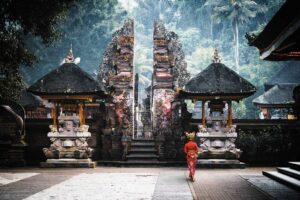
Tirta Empul Temple has a long and rich history, intertwined with myths and legends still held dear by the Balinese people. According to the Usana Balinese manuscript, the temple is linked to the story of an epic battle between an evil king named Mayadenawa and the god Bhatara Indra.
Mayadenawa, who did not believe in God and forbade his people from worshipping, used his spiritual powers for evil and black magic. Seeing the chaos that ensued, a priest named Sang Kulputih prayed to Bhatara Indra to end the evil king’s reign. Bhatara Indra and his army then attacked Mayadenawa, who eventually fled north to the village now known as Tampak Siring.
One night, Mayadenawa created a poisonous spring that killed Lord Indra’s troops. Seeing his poisoned troops, Lord Indra used his powers to create a holy spring that healed and revived his troops. This holy spring later became known as Tirta Empul.
After his failure, Mayadenawa attempted to escape by transforming into various forms, but Bhatara Indra ultimately defeated him. Mayadenawa’s flowing blood is believed to have formed the Petanu River, which was cursed for a thousand years.
Mayadenawa’s death is commemorated by Balinese Hindus every 210 days of the traditional Balinese calendar as a day of victory for good over evil in a ceremony called Galungan.

Leave a comment