
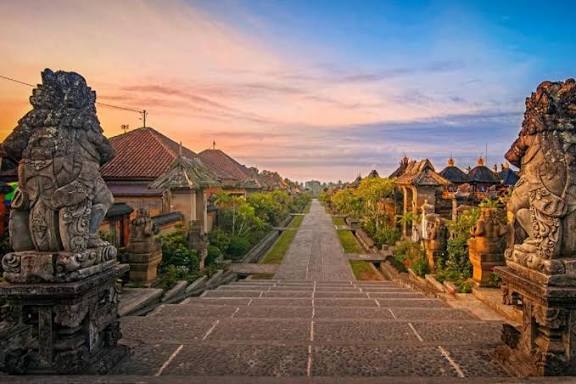
Penglipuran is a traditional village in Bangli Regency, Bali Province, Indonesia. This village is famous as a tourist destination in Bali because its people still practice and preserve traditional Balinese culture in their daily lives. The architecture of the buildings and land management still adhere to the concept of Tri Hita Karana, the Balinese philosophy of balance between God, humans, and their environment. They have succeeded in developing tourism that benefits the entire community without eliminating their culture and traditions. In 1995, Penglipuran village also received the Kalpataru award from the Indonesian government for its efforts to protect the bamboo forest in their local ecosystem.
HISTORY
Penglipuran Village is believed to have been inhabited during the reign of I Dewa Gede Putu Tangkeban III. Almost all the villagers believe they originated from Bayung Gede Village. The Bayung Gede people were skilled in religious, traditional, and defense activities. Due to their abilities, the Bayung Gede people were often summoned to the Bangli Kingdom. However, due to the considerable distance, the Bangli Kingdom eventually granted the Bayung Gede people a temporary resting place. This resting place is often referred to as Kubu Bayung. This is the place believed to be the village they now occupy. They also believe this explains the similarities in traditional regulations and building structures between Penglipuran and Bayung Gede Villages.
Regarding the origin of the name Penglipuran Village, there are two differing perceptions held by the local community. The first is that Penglipuran means “pengeling pura,” with “pengeling” meaning remembering and “pura” meaning ancestral place. The second perception states that Penglipuran comes from the words “pelipur,” meaning “entertainment,” and “lipur,” meaning “unhappiness.” Combined, Penglipuran means a place of solace. This perception arose because the King of Bangli at the time reportedly frequently visited this village to meditate and relax.

Leave a comment